

THE MEANINGS WOVEN IN
菱・花菱
hishi / hanabishi
A wish for good things to flourish and multiply.
Diamonds and Flower Diamonds
01
Where it comes from
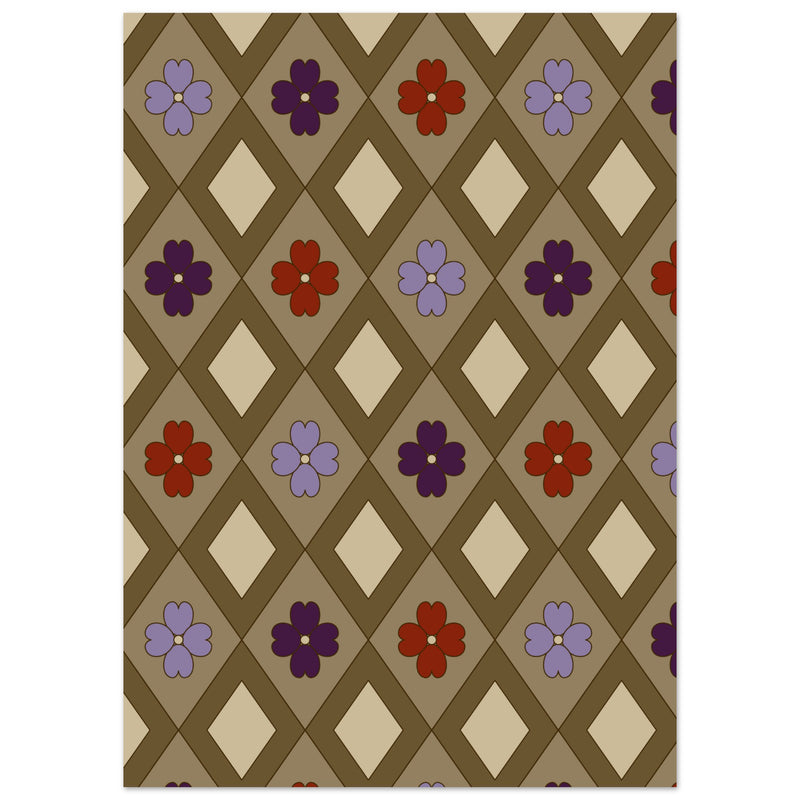
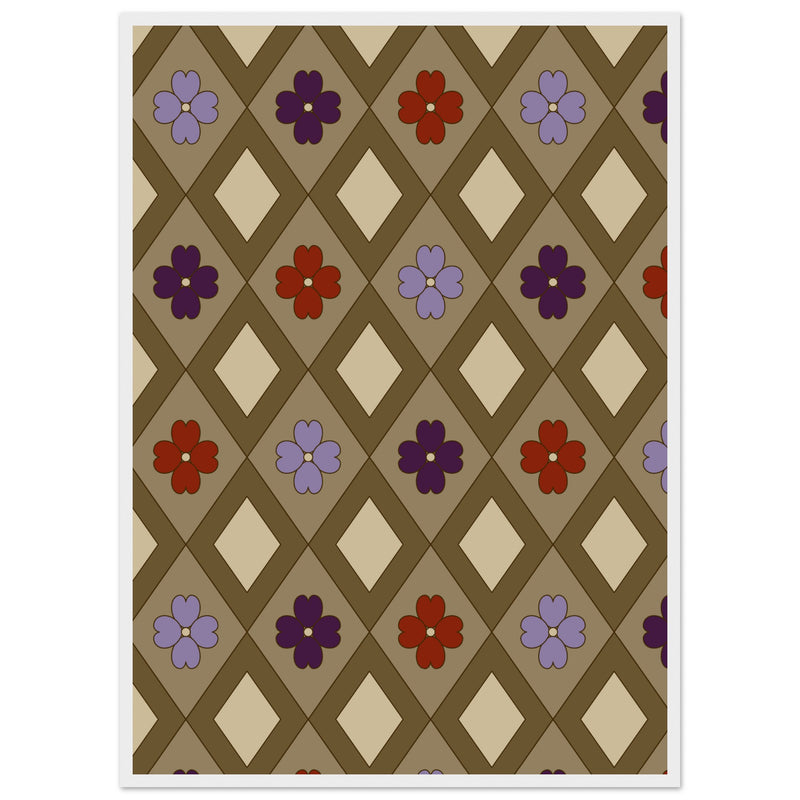
The diamond is said to take its name from hishi, the water caltrop, whose nut has much the same shape. Four petals set inside a diamond make the flower diamond, an old pattern long used at court. Flower diamonds set in a row, called saiwai-bishi, the diamond of happiness, have been chosen for bridal robes. Diamonds can be stacked, linked into a lattice, or filled with flowers, and each variation carries its own name. It has long carried a wish for a family and its fortunes to flourish.
02
On the cloth
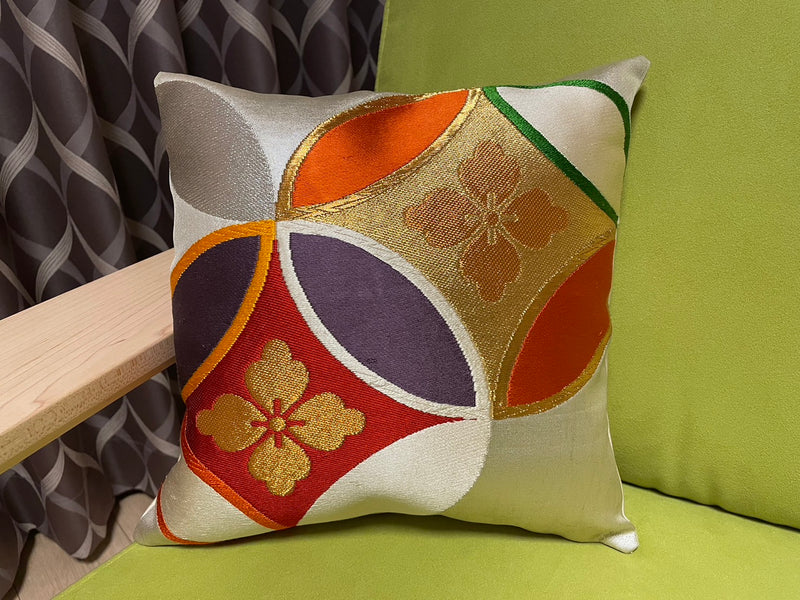
On obi, diamonds may run in a lattice across the ground, or open as flower diamonds scattered between other motifs. Here flower diamonds sit in a lattice on gold, in purple, orange, pale blue, and yellow; on cream, they join linked circles in vermilion, purple, and gold.

03
To give
Hishi suits a growing family, a new household, or a business you hope will thrive. It is a quiet, well-mannered gift for someone whose good fortune you share.
This pattern, to keep
All prints →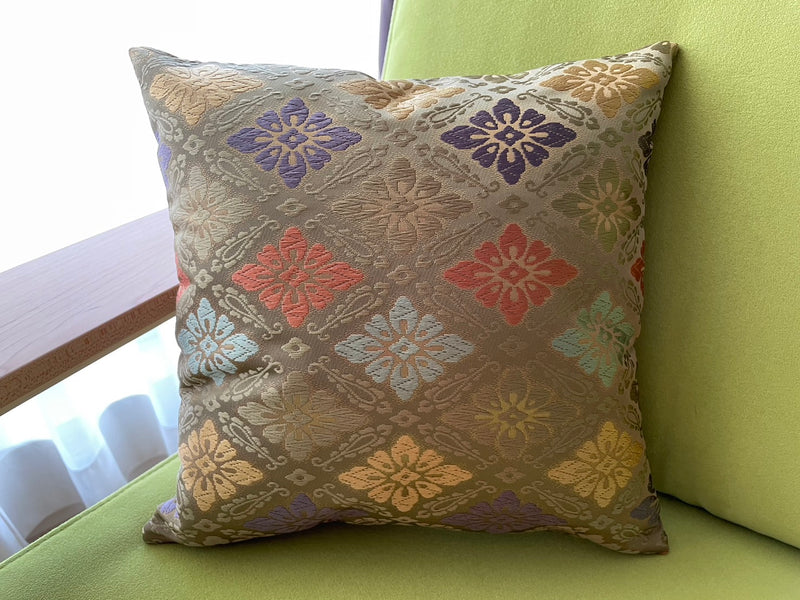

Two questions
What does the Diamonds and Flower Diamonds (菱・花菱) pattern mean?
A wish for good things to flourish and multiply. Hishi suits a growing family, a new household, or a business you hope will thrive.
Where does the 菱・花菱 pattern come from?
The diamond is said to take its name from hishi, the water caltrop, whose nut has much the same shape. Four petals set inside a diamond make the flower diamond, an old pattern long used at court.

