

THE MEANINGS WOVEN IN
青海波
seigaiha
A wish for calm days and good fortune, without end.
Blue Sea Waves
01
Where it comes from
Seigaiha shares its name with an old court dance of gagaku, and it is said the pattern was named for the waves drawn on the dancers' robes. The name of the dance is said to recall the quiet waves of Qinghai, a great lake far inland in China. Arcs are stacked like scales, each wave half hidden by the next, so the sea can go on as far as the cloth allows. People have given it a wish for peaceful days that keep coming, the way waves keep reaching the shore.
02
On the cloth
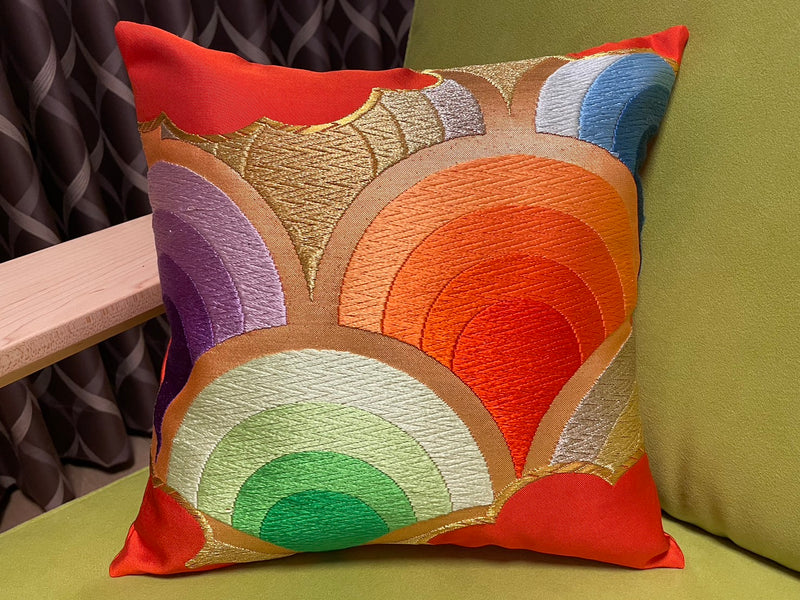
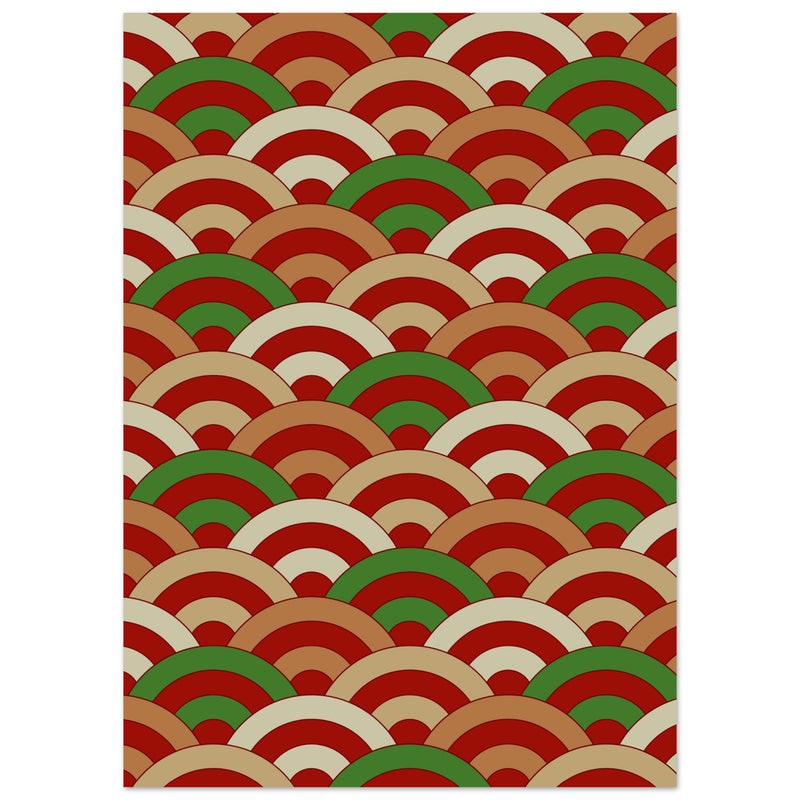
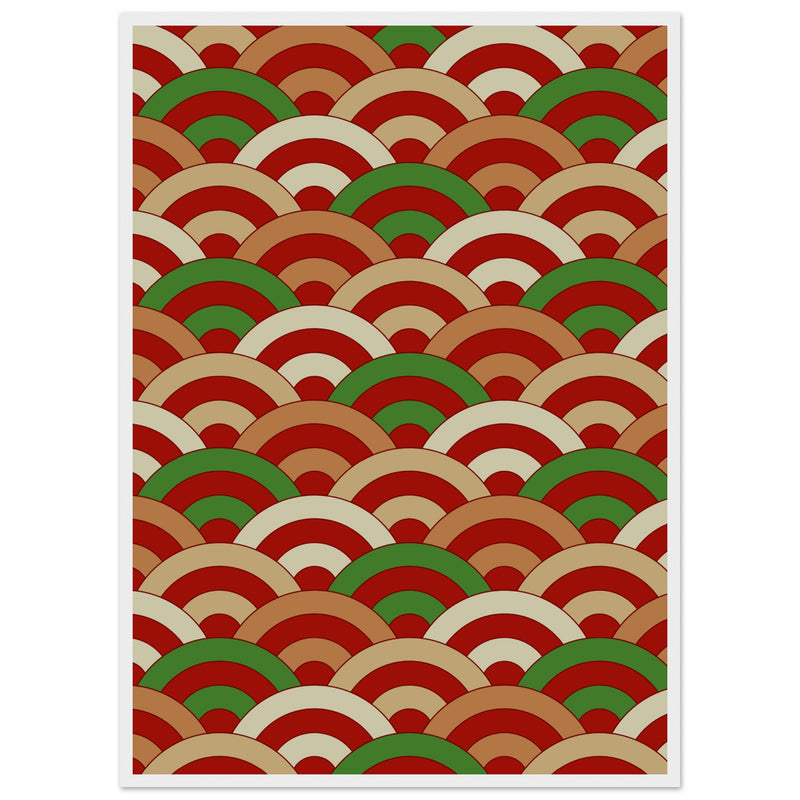
On obi, seigaiha may lie as a quiet ground of fine arcs, or rise large and bold across the cloth. Here it runs in rainbow bands of purple, orange, green, and pale blue on vermilion; on cream it stands as tall arches in vermilion, green, and gold; and on a small mat it loosens into swirling waves of peach, indigo, and gold.


03
To give
Seigaiha has been chosen for new homes, new jobs, and the start of a shared life. It suits someone you hope will have many ordinary, peaceful days ahead.
A word to keep
青海波
seigaiha
Written with the characters for blue, sea, and waves. Also the name of a gagaku court dance, performed in pairs.

Two questions
What does the Blue Sea Waves (青海波) pattern mean?
A wish for calm days and good fortune, without end. Seigaiha has been chosen for new homes, new jobs, and the start of a shared life.
Where does the 青海波 pattern come from?
Seigaiha shares its name with an old court dance of gagaku, and it is said the pattern was named for the waves drawn on the dancers' robes. The name of the dance is said to recall the quiet waves of Qinghai, a great lake far inland in China.

